
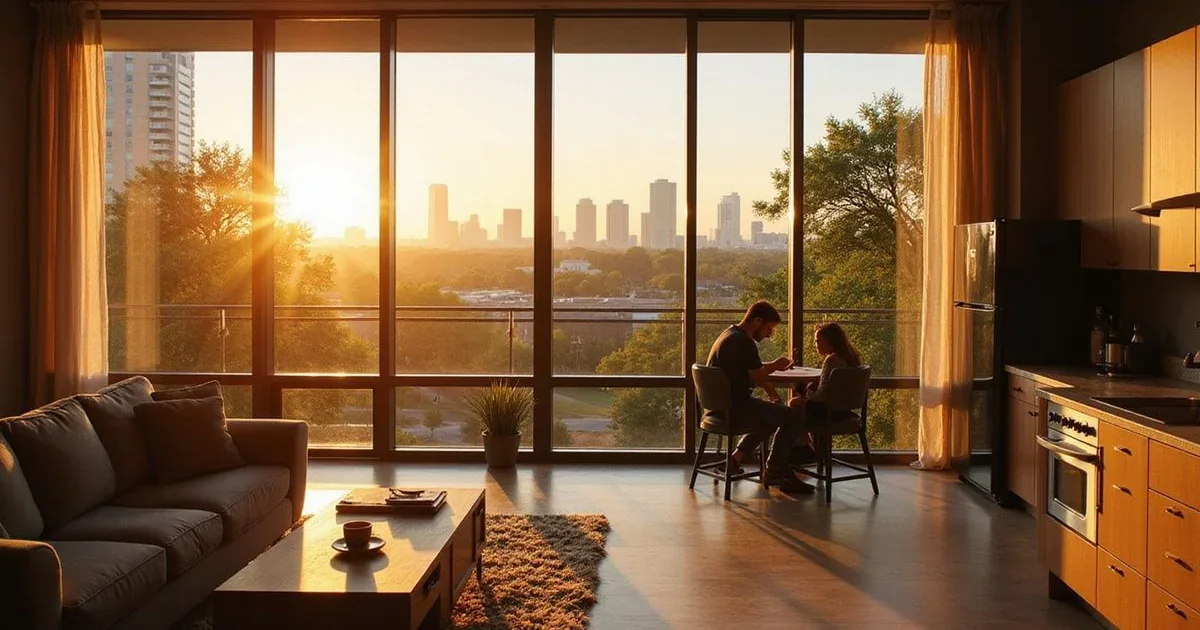
The three types, defined
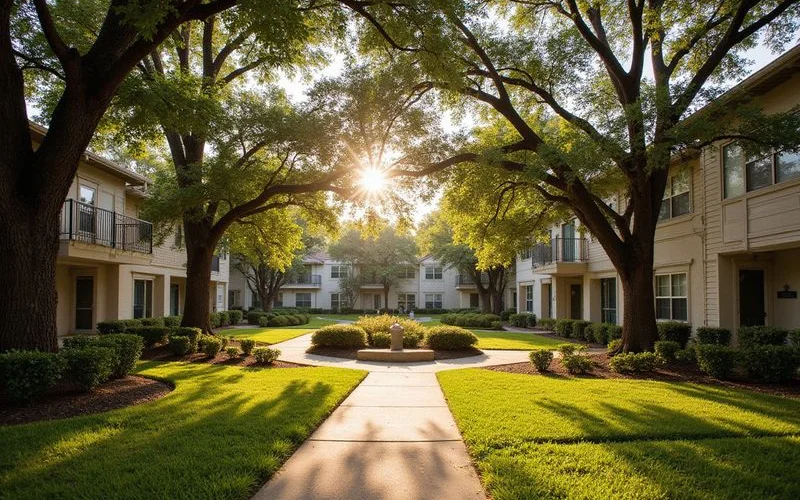
Garden style. Two to three stories, exterior entrances or open breezeways, surface parking, spread across a site with landscaping. It’s what most of Houston’s older buildings look like, and it’s common across the suburban rings too.
Mid rise. Roughly four to twelve stories, interior corridors, usually a parking garage underneath or beside, a moderate amenity package. Common in parts of the Inner Loop and in newer suburban construction.
High rise. Taller, structured garage parking, concierge or attended lobby, and a full amenity deck. Mostly Downtown, in the Museum District, and around Galleria/Uptown.
Everything else (price, noise, fees, how easy it is to live with a dog) comes from those basic differences. There’s more on the luxury end in luxury and high-rise apartments.
How they compare
| Comparison | Garden style | Mid rise | High rise |
|---|---|---|---|
| Typical rent | Lowest | Middle | Highest |
| Recurring fees | Lightest | Moderate | Heaviest |
| Parking | Usually surface, often free | Structured, sometimes charged | Garage, almost always charged |
| Amenities | Pool, basic fitness | Fitness, lounge, sometimes coworking | Full deck, concierge, sky lounge |
| Noise | Neighbors beside and above | Corridor and shared walls | Elevator, corridor, street below |
| Green space | Best | Depends on the building | Little at ground level |
| Where you’ll find it | Suburban rings, older Inner Loop buildings | Midtown, Heights, EaDo, Montrose | Downtown, Museum District, Uptown |
The cost gap is bigger than the rent gap
The fees scale with the building type.
A garden style community with free surface parking and a $4 pest fee is close to its advertised rent. A high rise with a $150 garage charge, $35 valet trash, a $50 amenity fee, and $65 bulk internet is $300 above its advertised rent. The breakdown is in what the amenity fees cover.
So two units advertised $400 apart can be $700 apart in practice. Compare the full monthly cost or don’t compare at all.
What each type is actually good for
Garden style gives you the most space per dollar, ground floor access, easy dog walks and a quieter setting. The tradeoff: the buildings tend to be older, there are fewer amenities, and you’ll usually need a car.
Mid rise gives you walkability and a decent amenity package without the high rise fees. It’s common inside the Loop and often a good middle ground if you’re unsure.
High rise gets you the view, the amenity deck, and a Downtown or Uptown location. It only pays off if you actually use what you’re paying for. If you wouldn’t use a concierge or a sky lounge, you’re paying for them anyway.
The honest test
Count the amenities you’d genuinely use each week. If the number is under two, a mid rise or garden style community will give you the same life for a lot less money.
Noise, which nobody asks about
Garden style puts neighbors beside and above you. Exterior doors cut corridor noise. They let in weather and parking lot sound, though.
Noise in mid rise and high rise buildings comes from different places: elevator shafts, trash chutes, hallway traffic, and in newer buildings, hard floors that carry footsteps. On a tour, ask what’s above the unit and what’s behind each shared wall.
Where the concessions are
Heaviest in high rise buildings and in new lease ups of any type. Those are the buildings working hardest to fill units in a market that softened through 2026. Garden style buildings run lighter offers and often start lower.
Whichever type you’re comparing, the same four numbers decide it: effective rent, fee total, renewal estimate, and early exit cost. We help you ask about all four on every option, free, since the property pays our fee after you sign.