

What a broken lease looks like on a screening report
Not as one thing. It shows up as a combination, and which parts show up decides how much it hurts.
A tenant screening report usually shows four things: that a past lease ended early, any balance the old landlord reported, and whether it went to collections. Separately, it shows whether an eviction was ever filed. A lease broken cleanly with the balance paid looks very different from one that ended in a filing with money still owed. That’s why our second chance leasing searches start by pinning down exactly what’s on the file.
The single most useful thing you can do is find out which of those apply to you before a property does. That’s covered in how to pull your own tenant screening report first, and it’s a cheap step.
The money is the main question
Most properties care less that you left early and more about whether your old landlord is still owed money.
An unpaid balance reported to a screening bureau is the item that turns a soft decline into a hard one. Reletting fees are common in Texas leases, and under the standard TAA lease they run up to 85% of a month’s rent. If that was never paid, it’s sitting on the file.
Three options, in order of how much they help:
Pay it. It clears the item, and you can say so. Get written confirmation from the prior landlord and keep it.
Negotiate a settlement. Some landlords will accept less to close a file. Get the agreement in writing before you pay, and get confirmation afterwards.
Set up a payment plan and document it. Weaker than clearing it, but far better than an untouched balance. Bring the agreement and a payment record to the application.
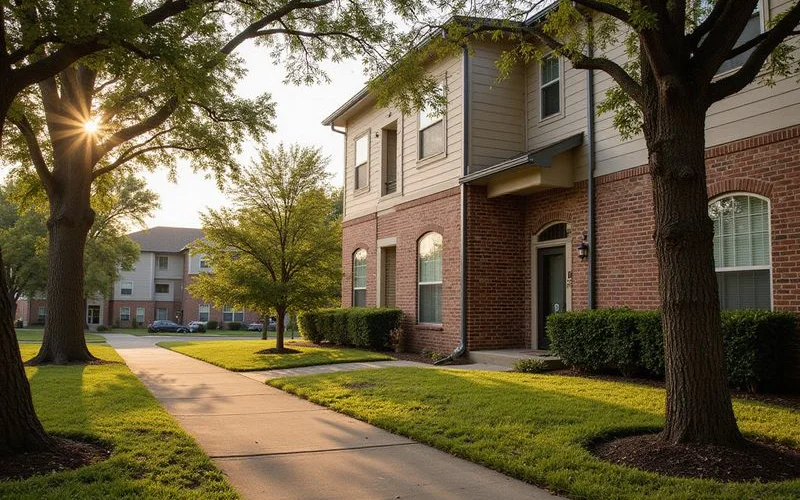
Which Houston buildings review each file on its own
Older, locally managed communities, mostly. About 18% of Houston’s housing units were built in the 1970s and 14% in the 1980s. All told, about 61% predate 1990 (US Census Bureau ACS, 2020 to 2024). That older Class B and C inventory is far more often locally owned or handled by smaller regional firms.
That matters since a corporate managed Class A property usually runs an automated scorecard where a reported rental balance is a hard stop. A locally managed community often has an on site manager who can read the explanation, look at your income, and make a judgment call.
Criteria differ from one community to the next, so we share what we hear from each one before you apply. The full approach is on second chance leasing.
Bring the explanation in writing
One short paragraph: what happened, what you did about it, and what’s changed. A job relocation, a medical event, or a household change with documentation attached is a very different conversation from a gap nobody explains.
What actually strengthens the application
Income headroom. Clearing the multiplier comfortably, 3.5x or 4x rather than exactly 3x, gives a manager room to say yes.
An additional deposit. Often the thing that turns a conditional approval into a full one. Usually refundable.
A guarantor. Someone qualified standing behind the lease. Not every property accepts a commercial service, so ask.
Time. A broken lease from 2022 reads differently than one from six months ago, and how far back screening looks varies.
Current landlord reference. If you’ve rented since, a clean recent rental record is the strongest single thing you can bring.
What not to do
Don’t leave it out and hope. It shows up on the report, and getting caught turns a fixable problem into a trust problem.
Don’t apply broadly and see what sticks. Every application carries its own fee, so applying everywhere is an expensive way to learn criteria you could have asked for in writing.
Don’t accept a verbal “that should be fine.” Leasing staff turn over a lot. A broken lease is one of the things they get wrong most often.
The realistic outcome
Plenty of renters with a broken lease sign in Houston every month. The ones who spend $200 in fees getting there, rather than $800, confirmed the criteria before the money moved.
Send us the specifics: what happened, what’s owed, and when. We’ll share what we’ve heard about each community’s criteria before you apply, and we’ll tell you honestly if the odds are poor. We never guarantee approval. The goal is for you to know where you stand first.